
文法
な形容詞
さ形 (名詞化)
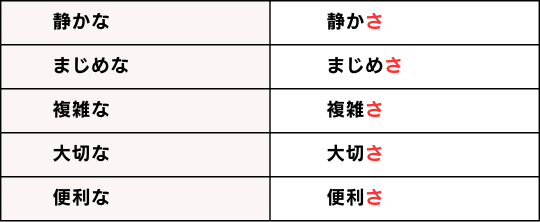
なA + さ
- な形容詞の活用形の一つで、形容詞を名詞に変換し、その形容詞の持つ性質や程度を表すのに使われる。
- さ形にするには、な形容詞の語幹に『さ』を付け加える。
例文
-
あのレストランの静かさが気に入った。I liked the quietness of that restaurant.
-
会社で働くときに大事なのは、まじめさだ。What is important when working at a company is seriousness.
-
漢字の複雑さは、日本語を勉強する人たちを困らせる。The complexity of kanji troubles people who study Japanese.
-
一人で住み始めて、家族の大切さに気が付いた。After starting to live alone, I realized the importance of family.
-
東京の便利さに慣れているので、田舎は住みにくいと思う。Because I am used to the convenience of Tokyo, I think the countryside is inconvenient to live in.
タグ
JLPT N3