
い-adjective
Conditional Form 〜ければ
- A conjugation of Japanese い-adjectives, which is used to create a conditional sentence composed of two clauses.
- The former clause represents conditions while the latter clause often represents opinions, hopes, requests, or command.
- To form the conditional form of an い-adjective, replace the ending い with ければ.
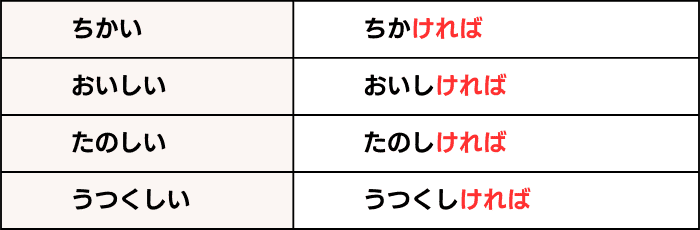
Meaning
if
Example Sentences
-
料理がおいしければ、たくさんの人が買います。If the food is delicious, many people will buy it.
-
明日忙しくなければ、仕事を休みたいです。If I'm not busy tomorrow, I'd like to take a day off from work.
-
日本語が上手になりたければ、もっと勉強したほうがいい。If you want to be good at Japanese, you should study more.
-
山田先生と話したければ、学校へ行ってください。If you want to talk to Mr. Yamada, please go to the school.
-
このかばんが、もっと安ければ買いたいです。If this bag were cheaper, I would want to buy it.
Tags
JLPT N4