
Verb
Transitive verbs
- A type of verb that describe actions affecting not only the doer but also other things or people, and require a direct object marked by the particle を.
- It is important to distinguish transitive verbs from their counterpart, intransitive verbs, which describe actions affecting only the doer and do not require a direct object to complete.
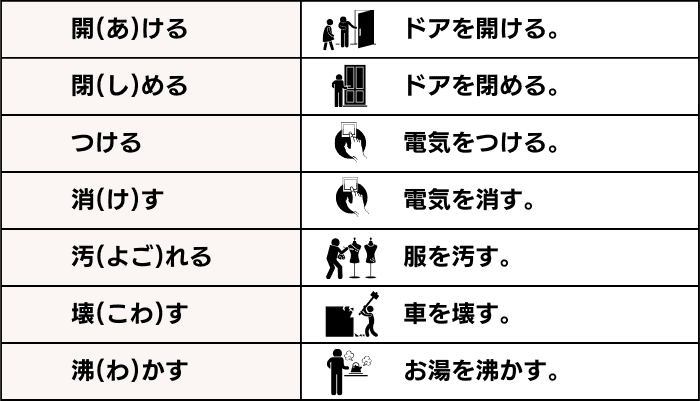
Example Sentences
-
私は、家のドアを開けます。I open the door to my house.
-
母は、汚れた服を洗っています。My mother is washing dirty clothes.
-
私は、弟の写真を撮った。I take a picture of my younger brother.
-
寝るので、部屋の電気を消した。I turned off the room light because I'm going to sleep.
-
暑いので、部屋の窓を開けました。I opened the window in the room because it's hot.
-
私は、お皿を洗いました。I washed the dishes.
-
兄が、父のパソコンを壊しました。My older brother broke my father's computer.
-
ええ。でも、この頃、竹の枝を折る人もいるそうです。Yes. But these days, I hear that there are people who break bamboo branches.
-
でも、今も、誰かが世話をしていると思います。But I think someone is still taking care of them now.
Tags
JLPT N4