
Grammar
Keigo (Honorific)
Kenjogo (Special form)
- Special form is a form of kenjogo (謙譲語, humble language) in which there are no fixed rules for verb conjugation. Instead, it can be created for each verb by allowing it to undergo unique conjugation.
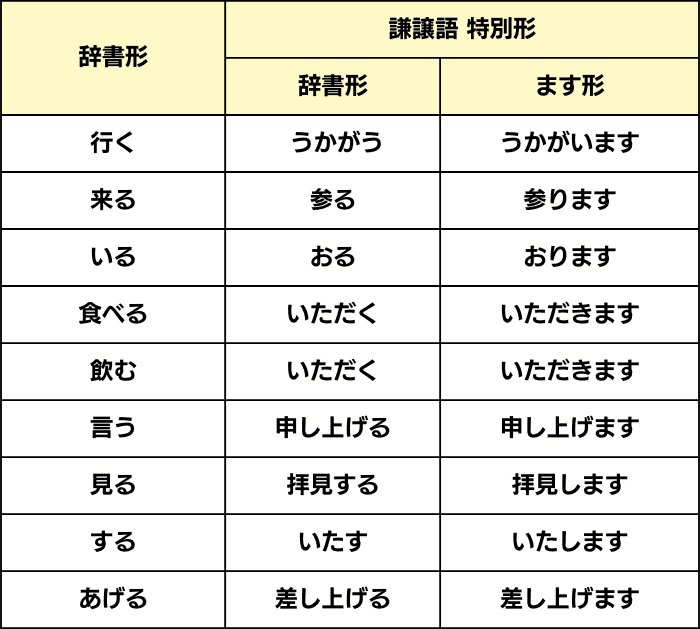
- Note that it is preferred for verbs with special forms to use the special form rather than the basic form.
Example Sentences
-
明日、先生の家に伺います。I visit the teacher's house tomorrow.
-
部長にお土産をいただきました。I received a souvenir from the manager.
-
お客様のチケットを拝見します。I will see your ticket.
-
私はアメリカから参りました。I came from America.
-
明日9時に、会社へ伺います。I will come to the company at 9 o'clock tomorrow.
-
私は先生に昨日の授業について伺いました。I asked the teacher about yesterday's lesson.
-
部長のお宅で奥様から、プレゼントをいただきました。I received a present from the director's wife at the director's house.
-
何とお礼を申し上げたらいいか、分かりません。I don't know how to say thank you.
-
はい。次は、必ずアメリカから、お土産を持ってまいります。Yes. Next time, I will definitely bring you a souvenir from the US.
Tags
JLPT N4