
Verb
Verb group
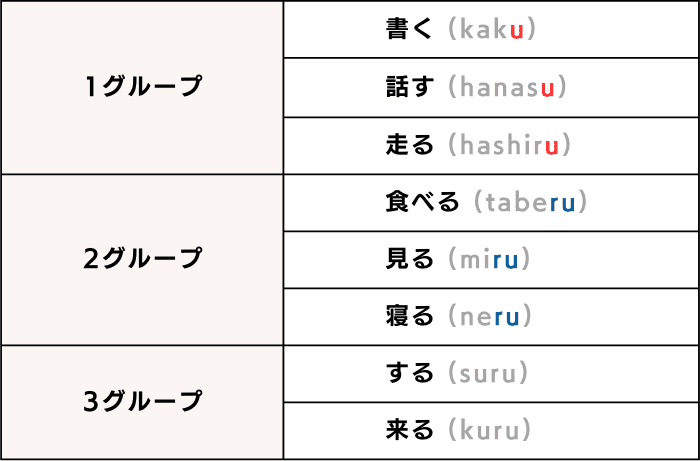
- Japanese verbs are classified into the following three groups based on the dictionary form and stem:
- Group 1 (1グループ): Also known as the "u-verbs" or "godan-verbs", these are verbs that end with the u-vowel sound in their dictionary form. However, some Group 1 verbs end with "る" after their stem ending in i-vowel sound. For example, "書く(to write)", "話す(to speak)", and "走る(to run)" are Group 1 verbs.
- Group 2 (2グループ): Also known as the "ru-verbs" or "ichidan-verbs", these are verbs that end with "る" in their dictionary form and do not have the "る" sound in the stem. For example, "食べる(to eat)", "見る(to look)", and "寝る(to sleep)" are Group 2 verbs.
- Group 3 (3グループ): Also known as the "irregular verbs", these are verbs that do not follow the conjugation rules of either Group 1 or Group 2. This group has only two verbs: "する(to do)" and "来る(to come)". - Understanding the verb group is important in Japanese because it affects the way the verb is conjugated in different tenses and forms. Each verb group has its own set of rules for conjugation, and knowing the group a verb belongs to can help in correctly conjugating it.
Tags
JLPT N5